Private Red Light Therapy in Carmel, IN
Lie back. Let the light work.
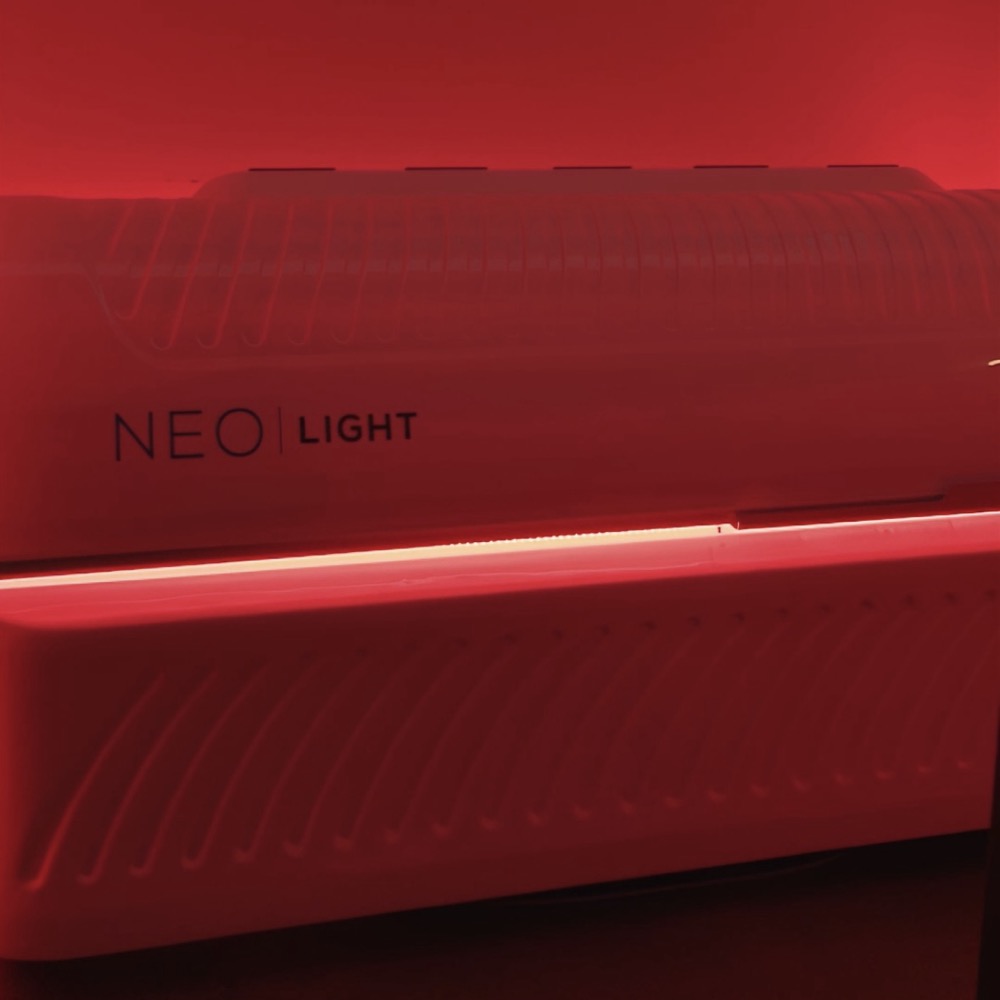
A full-body Clearlight LED red light bed at Ozwell in Carmel. No heat, no effort — you lie there for eight to twelve minutes. Switchable across three colors, so you can aim the same session at recovery, calm, or skin depending on what you need that day.
What it helps with
- Red + near-infrared — muscle soreness, skin and collagen
- Green — calming, and easier on light-sensitive eyes
- Pink — a skin-and-mood finisher, lightest on evidence
- No heat, no effort — just lie down
What a session actually feels like
Almost anticlimactic, in the best way. You lie down, the panels come on, and that's about it — no heat, no noise, no sensation beyond the light itself. Eight to twelve minutes later you get up. Nobody has ever called it hard work, which is exactly the appeal on a day when the cold plunge sounds like too much.
You'll wear the goggles we hand you, and they aren't decorative — more on that below.
Red, near-infrared, green and pink
Wavelength decides how deep light travels, and that's the whole logic of a switchable bed. Red light is absorbed close to the surface, which is why skin research uses it — collagen, texture, tone. Near-infrared is absorbed less by water and pigment, so it reaches further, and it's the band studied for muscles and joints. Green has a genuinely interesting research thread around light sensitivity and visual comfort. Pink is the least studied of the four; we like it, and we won't pretend there's a literature behind it.
You'll see confident penetration figures elsewhere — “reaches five centimetres!” Those trace to manufacturer literature rather than validated measurement in living people, so we'll skip the numbers.
The honest science
Red and near-infrared light is the most studied corner of this field, and its most consistent finding is a modest reduction in muscle soreness — a 2025 meta-analysis found a moderate effect two to four days after hard training, while rating its own certainty as low. That's a real result. It's also smaller than the marketing implies.
The bigger caveat is one you should hear from us rather than from a forum. Most of the positive research used handheld devices pressed directly against a specific muscle, not full-body beds. The one published trial on a whole-body bed found no change in the muscle-damage markers it measured, and its authors put that down to dose — a bed spreads its energy across your entire body instead of concentrating it on one sore hamstring. There's also solid evidence that light dosing isn't a more-is-better dial: past an optimal window, extra exposure stops helping. That's why sessions here are short by design, and why doubling up does nothing for you.
What we won't claim: this bed does not burn fat, contour your body, reduce cellulite, regrow hair, or change your hormones. Those claims are everywhere in the red light industry, and none of them hold up for a device like this one.
Eye protection, and why we insist
Wear the goggles. Near-infrared is the reason: it isn't bright, so you have no instinct to look away from it, and closed eyelids don't block it the way they block visible light. This isn't a liability formality — it's the one real safety rule of the room, and it takes two seconds.
Who should check with a doctor first
Talk to your physician before using the bed if you take anything that increases light sensitivity — that includes common antibiotics like doxycycline and ciprofloxacin, retinoids, and St John's wort — because the realistic risk here is a burn or a rash rather than anything exotic. Also check first if you have photosensitive epilepsy, since LED arrays can pulse; if you're pregnant, because a full-body bed can't exclude your abdomen; or if you have an active skin cancer or an undiagnosed lesion in the area. We're a fitness club, not a medical facility, and none of this is medical advice.
Questions
What does red light therapy help with?
How long is a red light therapy session?
How often should I use red light therapy?
Should I use red light therapy before or after a workout?
Do I need to wear eye protection for red light therapy?
Does red light therapy help with weight loss or fat burning?
Who should not use the red light bed?
Do I need a membership for red light therapy?
One of six recovery modalities at Ozwell in Carmel —
Cold Plunge · Infrared Sauna ·
Red Light Therapy · Compression ·
PEMF · mild HBOT.
See membership & pricing →
From the guides: Red light therapy — benefits, timing & how often