Private Cold Plunge in Carmel, IN
Two minutes that change the whole day.
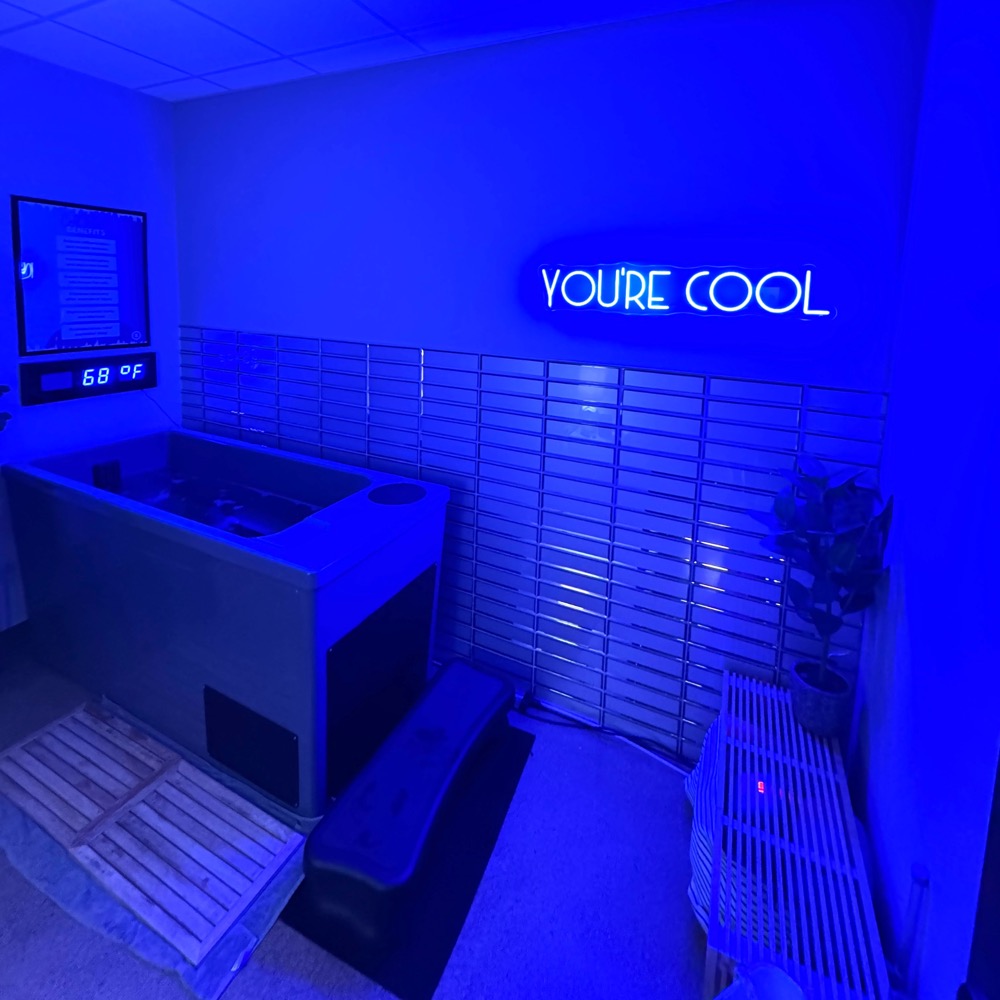
Cold-water immersion at 49–52°F at Ozwell in Carmel. The cold constricts your blood vessels and lights up your nervous system; as you warm back up, fresh blood floods through and everything resets. Uncomfortable for the first thirty seconds, clarifying for the rest of the day.
What it helps with
- Less muscle soreness in the days after hard training
- A sharp lift in alertness when you get out
- Feeling more recovered between sessions
- A daily hard thing you chose on purpose
The first thirty seconds
Everyone's experience is the same at the start: you get in, your breath catches, and your body tells you loudly to leave. That gasp is a reflex called the cold shock response, not a sign anything is wrong. It peaks fast and fades within about half a minute if you let it.
The genuinely encouraging part is that it habituates. Research on repeated exposure shows the cold shock response is substantially blunted after roughly five or six sessions — so the fourth plunge is meaningfully easier than the first, and that isn't willpower, it's physiology. You don't have to be someone who likes cold. You have to go about six times.
How cold, and how long
Our plunge runs 49–52°F, and you have the room for 10 minutes. Here's the honest version of the research: the meta-analyses that looked hardest at soreness converge on something like 10 to 15 minutes in water around 50–59°F — which is longer than most people assume, and no colder than what we run. Colder water does not buy you more benefit; below about 41°F the evidence gets worse, not better, and the risk goes up.
That said, three minutes of cold you'll actually repeat beats twelve minutes you dread. Start at one to two minutes, build toward five, and go longer only if you're comfortable and someone knows you're in there. One more useful finding: studies comparing full-body against waist-deep immersion found no meaningful difference in results. If getting your shoulders under is the thing stopping you, it isn't required.
The honest science
Where the science is strongest: cold-water immersion reliably reduces how sore you feel in the days after hard training. That is the finding with real weight behind it, replicated across multiple independent reviews. Feeling more recovered and less fatigued holds up well too. The alertness lift when you climb out is real — though the “dopamine boost” figures quoted online trace back to a study using hour-long immersions that measured blood, not brains.
Things we leave off on purpose, because the evidence doesn't support them. Cold plunging does not “reduce inflammation” — measured acutely, inflammatory markers go up, not down. It does not melt fat or supercharge your metabolism; a 2025 trial of repeated immersion found no change in energy expenditure at all. It is not an immune booster — the study everyone cites found people took fewer sick days, but were not measurably less ill. And it is not a treatment for depression or anxiety; the best-designed trial found a warm shower performed just as well.
Worth knowing about the evidence itself: cold-water research has been run overwhelmingly on young men. One recent review of over 3,000 participants included just a single study with women in it. That doesn't mean the findings are wrong, but it does mean nobody should hand you a protocol with more confidence than the data supports.
Before or after lifting? This one matters.
If you lift for size or strength, don't plunge straight after your session. This is well established and most clubs get it backwards. Cold immersion immediately after resistance training blunts the signalling that drives muscle growth: a 12-week trial found greater strength and muscle gains in the group that skipped the cold, and a 2024 meta-analysis pooling the research reached the same conclusion. The common advice is to leave a few hours between the barbell and the tub — that gap is sensible rather than precisely proven, but the underlying effect is not in doubt.
Two useful exceptions. Endurance training is fine — a six-week study found cold immersion after interval work neither helped nor hurt aerobic adaptations. And if you're mid-competition or racing again tomorrow, feeling recovered tomorrow matters more than a marginal adaptation, so plunge away.
Never plunge immediately before lifting, sprinting or jumping. Cold muscle produces force more slowly, and the measured drop in jump performance right after immersion is substantial.
Breathing, and the one rule
Keep your head above water and keep breathing. Don't hold your breath, and don't put your face under.
The reason is worth stating plainly: cold triggers two opposing nervous-system responses at once, and that conflict can produce heart rhythm disturbances. In studies of cold immersion, irregular beats were uncommon when people simply breathed normally, and became dramatically more frequent when face immersion was combined with breath-holding. Breathing steadily with your head up is the single thing that keeps this a recovery tool rather than a risk. Slow exhales help more than anything else.
Get out if you stop shivering, lose feeling in your hands or feet, feel dizzy, or your chest feels tight. Warm up passively afterwards — dry off, get dressed, move gently. No hot shower straight after a plunge.
Who should check with a doctor first
Please talk to your physician before using the cold plunge if you have any heart condition — coronary artery disease, an arrhythmia, heart failure, or uncontrolled blood pressure — or a history of stroke, because the cold triggers a sharp rise in heart rate and blood pressure within seconds. The same applies if you're pregnant, have Raynaud's, diabetes or nerve damage affecting sensation, or a seizure disorder.
One condition is an outright no: cold urticaria, an allergic reaction to cold that can be severe. If cold exposure has ever given you hives or facial swelling, don't get in. Don't plunge after drinking, don't plunge alone, and if you're under 18 we'll need a parent involved. We're a fitness club, not a medical facility, and nothing on this page is medical advice.
Questions
How cold is the cold plunge at Ozwell?
How long should I stay in the cold plunge?
Should I cold plunge before or after a workout?
Does cold plunging hurt muscle growth?
Do I need to put my head underwater?
How often should I cold plunge?
Does cold plunging boost your immune system or reduce inflammation?
Who should not use the cold plunge?
Do I need a membership to use the cold plunge?
One of six recovery modalities at Ozwell in Carmel —
Cold Plunge · Infrared Sauna ·
Red Light Therapy · Compression ·
PEMF · mild HBOT.
See membership & pricing →
From the guides: Cold Plunge 101 — benefits, temperature & how long · Contrast therapy: sauna & cold plunge order