Infrared Sauna vs. Traditional Sauna: What’s the Difference?
Same deep sweat, two very different roads there.
Infrared and traditional saunas both deliver that wrung-out-in-the-best-way feeling of a serious sweat — they just take very different routes to get you there. This guide breaks down how each one works, what a session actually feels like, what the benefits really are, and how to pick the right heat for your routine.
How does an infrared sauna work?
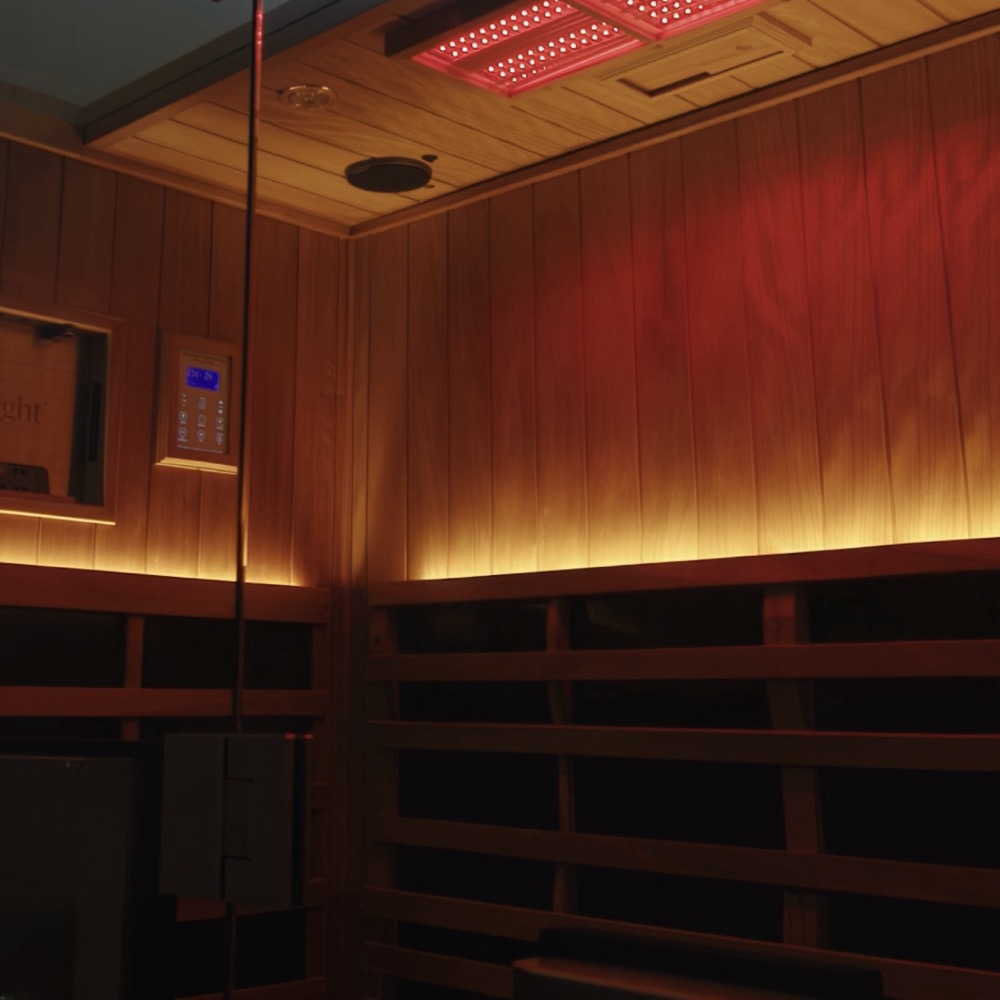
An infrared sauna uses infrared panels to warm your body directly instead of blasting the air around you. The air in the room typically sits around 120–140°F — milder than a traditional sauna — though units vary, and ours at Ozwell run hotter, about 160–175°F — but because the infrared energy is absorbed by your skin and tissue, you still reach a deep, productive sweat. It heats you from the inside out rather than just heating the room, so the experience feels gentler while the sweat runs just as honest.
Many people find they can breathe easily and settle in for a longer session at these temperatures. That matters more than any spec sheet, because with heat exposure the habit you can actually keep is the one that pays off.
How does a traditional sauna work?
A traditional sauna — the Finnish-style hot room most people picture — heats the air itself, typically to around 150–195°F, using a stove and a bed of hot rocks. Your body warms from the outside in. Ladle water over the rocks and a wave of humid heat rolls through the room, spiking how hot everything feels for a minute or two.
The experience is more intense and arrives faster: the heat hits harder, sessions tend to run shorter, and stepping out feels like surfacing. For a lot of longtime sauna-goers, that intensity and ritual are exactly the point.
What does a session feel like?
In an infrared sauna, the heat builds gradually. The first few minutes feel almost mild; by minute ten you’re in a steady, full-body sweat without the air ever feeling hard to breathe. It’s heat you can stretch in, read in, or just sit quietly with.
A traditional sauna announces itself the moment you open the door. The air is hot on your skin and in your lungs, sweat comes fast, and most people cycle in and out in shorter rounds. Some love that; others find it suffocating — and honestly, that gut reaction is the single best test of which sauna is for you.
What are the benefits — honestly?
Both formats are forms of deliberate heat exposure, and their benefits overlap far more than sauna marketing suggests. Where the research is most consistent:
- Muscle recovery — heat helps muscles relax and feel less sore after training
- Circulation — your heart rate rises in a way that mirrors light exercise
- Downshifting — many people find regular sessions make it easier to relax and sleep deeply
Two claims to be skeptical of from either sauna type: “detox” (sweat isn’t a detox system — your liver and kidneys handle that) and “weight loss” (the scale change after a session is water, not fat). And a quick note: this is general information, not medical advice. If you’re pregnant, have a heart condition, or take medications that affect heat tolerance, talk to your doctor before starting a sauna habit.
Which sauna should you choose?
- Choose infrared if you want longer, more comfortable sessions, find very hot air hard to breathe, or want a heat practice that’s easy to repeat several times a week.
- Choose traditional if you love intense heat, steam, and ritual, and prefer a shorter, sharper session.
- Honest answer: neither is “better.” They’re two doses of the same medicine — consistent heat exposure — and the right one is whichever you’ll actually use, week after week.
What does Ozwell have?
Ozwell Fitness in Carmel has private infrared sauna rooms — the room is yours, with no sharing a bench with strangers. We recommend 20–30 minutes (new users start at 10–15), two to three times a week, after a workout or any time you need to downshift.
The sauna is one of six recovery modalities under one roof, and it stacks well with the rest: pair it with the red light bed or PEMF on a recovery day, or go sauna → cold plunge for contrast. It’s unlimited on the Premium and Recovery memberships, and you can try it — along with everything else — on the $99 first-week trial.
Frequently asked questions
Is an infrared sauna as effective as a traditional sauna?
What temperature is an infrared sauna vs. a traditional sauna?
How long should I stay in an infrared sauna?
Does Ozwell have infrared saunas?
Try the heat for yourself
The fastest way to settle the infrared-vs-traditional question is to sit in one. Ozwell’s private infrared sauna rooms are in Carmel, right on the Monon.
More from Ozwell in Carmel — Infrared Sauna · Recovery · Membership & pricing · ← All guides